

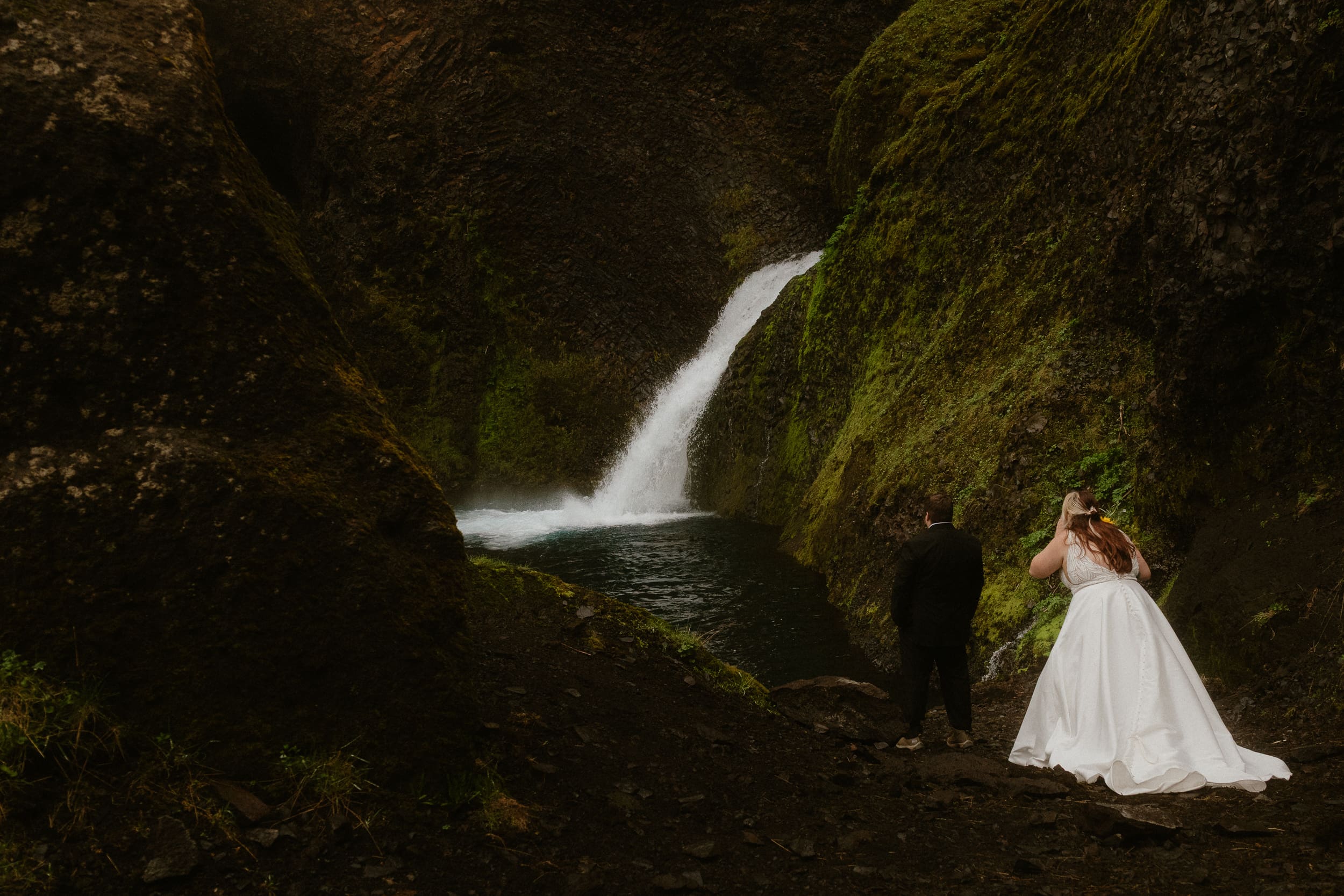


Hey there! I’m an elopement photographer based in Iceland who knows exactly how to legally get married in Iceland as a foreigner — because I’ve been through the process myself and helped couples I work with navigate it too. I visited Iceland 13 times between 2015-2019, eloped here in 2020, and never left!
The good news is, it’s not as complicated as you might think, and Iceland happens to be one of the most stunning, LGBTQIA+ friendly places in the world to get married as a foreigner.
Do I need a marriage visa?
Nope! As a tourist, you can legally get married in Iceland through a licensed local celebrant, who can officiate civil, religious, humanist, or Pagan/Ásatrú ceremonies (more on this below). I say licensed and local because even if your best friend back home is ordained, they are not legally allowed to perform marriages here (but they could of course perform a symbolic ceremony here for you!).
So, as long as you are able to travel to Iceland and you aren’t already married or separated, you’re in!
Here are the steps that I’ll break down below:
- Decide what type of ceremony speaks to you most and make your appointment with the celebrant you chose (I help all my clients decide on this based on the type of experience they want to have)
- Gather, certify, and send in all your paperwork
- Submit your Hjónavígsla
- GET MARRIED
- You’ll receive an International Marriage Certificate a few weeks later
Type of wedding ceremonies in Iceland
In Iceland, there are a few different ways to get married legally or symbolically.
- Humanist (symbolic or legal)
- Pagan/Ásatrú (symbolic or legal)
- Religious (symbolic or legal)
- Civil (legal)
Humanist Ceremony
Symbolic or Legal
What is it?: Humanism is a philosophy centered on human experience, reason, and personal values rather than religious belief, and a humanist ceremony brings that same spirit to your wedding day. In Iceland, these ceremonies are conducted by certified celebrants through Siðmennt (The Icelandic Humanist Association) and are fully legally binding. The celebrant works with you to craft something entirely personal: your own vows, your own chosen location, your own rituals.
Pros: It’s one of the most flexible legal ceremony options Iceland offers, with officiants willing to travel to remote areas and accommodate almost any vision. Some celebrants also double as driver guides, so you can have a really unique experience of getting married, let’s say, on a glacier.
Good to know: Celebrants can book up quickly, especially for summer elopements, so it’s good to plan this with notice. A truly personalised ceremony takes preparation, and I wouldn’t recommend rushing that part.
Costs: The fee for a celebrant, whether your marriage is legal or symbolic, is 90.000 ISK (around $750) plus travel fees to your ceremony location. Generally, the total cost can be up to $1500 USD, and the experience is super memorable, unique, and special.
You can read about the 10 Commitments of Humanism here.
Pagan/Asatru Ceremony
Symbolic or Legal
What is it?: Ásatrú is the ancient Norse faith of Iceland’s first settlers, revived formally in 1973 and today holding the same legal status as any recognised religion in the country — something that sets Iceland apart from almost everywhere else in the world. At its core, it’s a belief system built around connection to nature, Norse mythology, and respect for ancestral heritage, though for many couples it’s not so much about a religious conviction as it is a profound cultural touchstone. The ceremony is led by a Goði (a certified pagan chieftain), who reads verses from the ancient Eddic poems before you exchange vows over a copper oath ring and drink mead together from a Viking horn. Some couples also include a handfasting, where your hands are bound together with cord as you say your vows (which is literally where the phrase “tying the knot” comes from).
Pros: There is genuinely nothing like this anywhere else. It’s rooted in Iceland’s actual history and landscape, it’s legally binding, and the whole experience feels completely unlike a conventional wedding ceremony. If you’re drawn to Norse mythology, nature, and Viking heritage, this is for you.
Good to know: There aren’t many Pagan celebrants available in Iceland, so booking early is essential. If Ásatrú isn’t part of your own background, it’s also worth having an honest conversation with your Goði about how to engage with the tradition meaningfully, not just aesthetically.
Religious Ceremony
Symbolic or Legal
What is it?: A religious ceremony in Iceland is a symbolic or legally binding wedding officiated by an ordained minister or priest within a recognised faith. There is no requirement for religion, but if you ordain a Priest, then the ceremony will be of the Christian faith. Churches in Iceland range from grand Reykjavik landmarks to tiny, centuries-old turf churches tucked into the countryside, so the setting can be just as striking as any outdoor elopement.
Pros: If a faith-based ceremony is meaningful to you as a couple, Iceland offers a genuinely beautiful backdrop for it. Historic Icelandic churches are incredibly photogenic and steeped in character, and a religious ceremony here carries the same legal weight as anywhere else in the world.
Good to know: Requirements vary by denomination. Some churches may ask that one or both partners are baptised or confirmed within the faith, so it’s worth checking directly with your chosen officiant well in advance. English-speaking clergy are available but not guaranteed everywhere outside Reykjavik, so confirming the language of the service early is important.
Costs: Pricing varies by denomination and location. Contact your chosen church or officiant directly for current fees.
Civil Ceremony
Legal
What is it?: A civil ceremony is a straightforward, legal wedding conducted by a District Commissioner (Sýslumaður) — a government official. It takes place at their office during business hours on specified days of the week, involves a simple exchange of vows, and that’s pretty much it. In most cases, they don’t even exchange your rings.
Pros: It’s the cheapest legal route to getting married in Iceland, with a minimum fee of around 15,400 ISK (roughly $110 USD).
Good to know: In all honesty, I believe if you’re flying all the way to Iceland to elope, your ceremony should feel like something meaningful. A civil signing at a government office, squeezed into an available appointment slot on a Tuesday afternoon, is about as far from that as you can get. It’s the DMV of weddings. The experience also becomes fragmented. You do the legal stuff at the office, then head somewhere beautiful for photos, and the two things never really connect into a single meaningful moment.
Every other ceremony type on this list gives you that cohesion: the legal and the emotional happen in the same place, at the same time, in a setting that actually reflects why you came to Iceland in the first place. For most couples, the small extra cost of a humanist, Ásatrú, or religious ceremony is absolutely worth it.
What documents do I need to legalize my marriage?
This is the part that requires the most work on your end, and you’ll need to do this for any legal ceremony, regardless of the type you choose.
All documents must be in English or a Nordic language, otherwise you’ll need a certified translation.
- Birth Certificates: Certified + stamped copies, usually issued by your state’s vital records office (U.S.) or your city clerk’s office (outside U.S.), apostilled (by your Secretary of State or Foreign Office)
- If applicable, Divorce or Death certificates, certified + stamped, apostilled
- If applicable, Divorce or Death certificates, certified + stamped, apostilled
- Certificate of Marital Status/No Impediment: certifies you are not already married or separated. There is no single official international document, and your state or country may or may not issue a document like this
- In the US, you can first check with your County Clerk to see if they issue a Certificate of Marital Status/No Impediment
- If no such document exists, your state’s Department of Health or County Court can often issue a “Marriage Records Search” (this differs by state, but it’s a good place to start)
- A county wide search is enough
- The search needs to date back to the year you were eligible to be married (usually 18)
- If the paperwork you are issued is not stamped or watermarked, you will have to get an apostille to prove the authenticity of the paperwork
- In the UK, this is known as a Certificate of No Impediment (CNI) document
This certificate must not be older than 12 weeks on the day of your marriage, so don’t apply for it too early. I usually recommend obtaining this document around the 6-week mark.
*Don’t worry, either myself or your licensed celebrant will help guide you through this process!
- In the US, you can first check with your County Clerk to see if they issue a Certificate of Marital Status/No Impediment
- Valid Passports: they should not expire within 6 months of your travel dates, and copies of your passport also need to be notarized
If you prefer to skip the process of certifying all your documents and sending them to Iceland to get legally married, you can choose to have a symbolic ceremony, which can be performed by a Humanist, Pagan/Ásatrú celebrant, or religious officiant. You’ll pay the same price for the ceremony regardless of whether it’s legal or symbolic; the only cost you will save is the marriage application fee and digital processing of your Certificate of Marital Status (totaling around $175).
You could also have a symbolic ceremony with no celebrant — just you and your love saying your vows surrounded by nature (while I’m shedding a few happy tears somewhere and giving you space, but documenting the whole moment) — or, if someone special to you is ordained.
Whether you choose a symbolic ceremony, or want to legally get married in Iceland, there’s no right way or wrong way; only the way that feels truest to you.
Should I have a celebrant at my Iceland Elopement?
I truly believe there is so much value in having your ceremony officiated, whether you choose the Humanist, Ásatrú, or religious route. Why?
A celebrant makes your moment structured, personal, intimate, and fun. They can help you add meaning to your ceremony, whether it’s by way of connecting your relationship to Iceland or putting the full focus on you and your love story. Many celebrants will meet with you over video first and/or send you a personalized questionnaire to help understand and honor your relationship on the day. The ceremony itself takes around 30 minutes, and it’s a really natural moment to include in your timeline of the day.
While not having a celebrant is absolutely a choice you can make together, I do want to note that as a photographer, I can help guide where to say your vows to one another and a general structure for how/when it makes the most sense in our day, but then I completely step back and give you space to share this moment with the two of you. When a celebrant is with you, they guide you both together and it allows me to fully focus on my work on documenting the most important aspect of your day.
Also, if you choose to legally get married in Iceland, your celebrant will help you utterly and completely in the documentation process and legalities – I can only offer my advice from my own personal experience and cannot guarantee that rules or regulations will remain unchanged.
Marriage Application Process
After you’ve chosen your celebrant and got all your paperwork together, you’ll submit your Marriage Notification Form which two witnesses from back home will sign (they don’t need to be present at your ceremony). If you don’t have witnesses, your celebrant can assist and guide you with this as well as handle all your paperwork.
You’ll want to submit your documents around 3 or 4 weeks before your planned wedding date.
With the form, you’ll scan all the copies of your certified and apostilled documents, and email them to the district commissioner, who will then approve/disapprove/request more information. After approval, you’ll have to physically mail your documents to Iceland via UPS, DHL, or FedEx (never USPS).
Once your physical documents are received, you’ll receive an official Marriage Notification Certificate, which certifies that you are free to marry in Iceland 🥳
Getting your International Marriage License
Your wedding celebrant or officiant will submit the necessary paperwork to the National Registry for your marriage license, and you can request the document is apostilled.
Final Thoughts
Choosing the right ceremony type is one of the most important decisions you’ll make in your Iceland elopement planning, and it’s not always obvious from the outside which one is the right fit. I work with couples across all of these options and I’m happy to talk through what makes sense for your vision — Just send me a message to get started.


+ Show Comments
- Hide Comments
add a comment